Noise-Induced Hearing Loss: Causes, Signs and How Loud Is Too Loud
Noise-induced hearing loss comes from long exposure above 85 dBA or one blast near 140 dB. Learn the early signs, who is at risk and how to prevent it.
85 dB on the decibel scale
Tap another sound to compare- Safe · under 65 dB
- Caution · 65–85 dB
- Risk · over 85 dB
Noise-induced hearing loss (NIHL) is permanent hearing damage caused by sound that is too loud for too long, or by a single extremely loud burst. According to the US National Institute on Deafness and Other Communication Disorders (NIDCD), sound at or below 70 dBA is unlikely to harm hearing even after long exposure, while long or repeated exposure at or above 85 dBA can cause hearing loss. An impulse near 140 dB, such as a gunshot, can do damage instantly.
It usually develops slowly and without pain, which is why many people do not notice it until it is well advanced. It is also, as NIDCD puts it, the one type of hearing loss that is completely preventable.
This guide is general information. It is not a diagnosis or medical advice. If you are worried about your hearing, see a doctor or audiologist for a hearing test.
What causes noise-induced hearing loss?
There are two main routes:
- Long or repeated exposure to loud sound: a noisy job, power tools, loud music through earbuds, regular concerts or motor sports. The damage builds up over months and years.
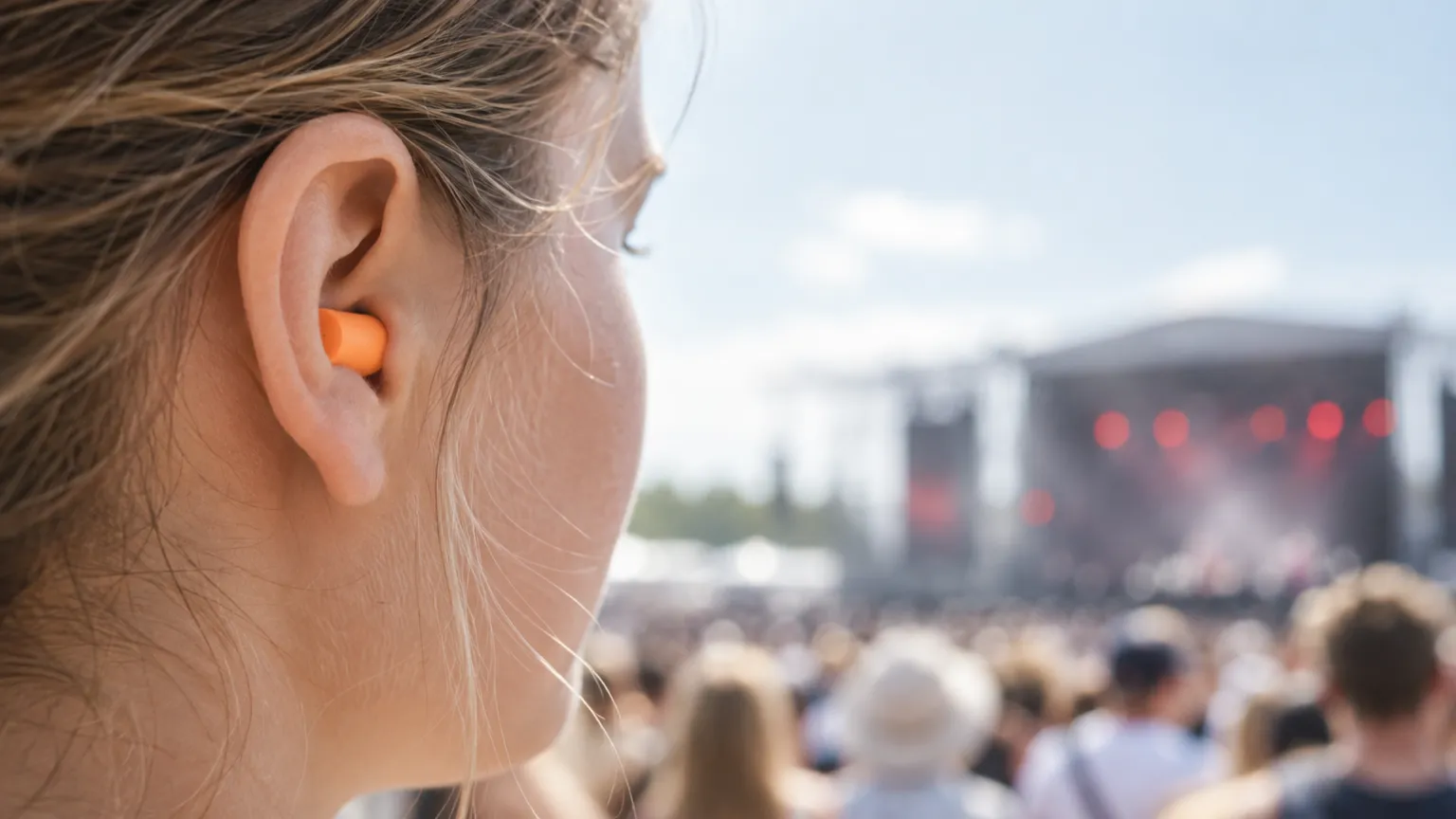
- A single intense impulse: a gunshot, an explosion, fireworks at close range. NIDCD notes that these can rupture the eardrum or damage the small bones of the middle ear, and the loss can be immediate and permanent.
Inside the inner ear, thousands of tiny hair cells turn vibration into nerve signals. Loud sound overworks and bends them. With enough exposure they die, and in humans they do not grow back.
How loud and how long causes hearing damage?
Risk depends on level and time together. NIOSH, the US institute for occupational safety research, recommends a limit of 85 dBA averaged over 8 hours, with the safe time halving for every 3 dB increase. OSHA’s legal workplace limit is 90 dBA for 8 hours, with an action level at 85 dBA where employers must start a hearing conservation program.
| Level | NIOSH safe time per day | Typical sources |
|---|---|---|
| 70 dBA | No limit | Vacuum cleaner, busy road |
| 85 dBA | 8 h | Heavy traffic, blender |
| 90 dBA | 2.5 h | Gas lawn mower, subway |
| 95 dBA | 47 min | Motorcycle, power drill |
| 100 dBA | 15 min | Earbuds at full volume |
| 105 dBA | About 5 min | Stadium crowd, nightclub |
| 110 dBA | About 1.5 min | Rock concert, chainsaw |
| 120 dBA | About 9 s | Siren up close |
| 140 dB peak | No unprotected exposure | Gunshot, fireworks up close |
These times add up across a day. An hour of power tools plus a loud commute can use up a full day’s allowance. The how loud is too loud guide goes through the NIOSH and OSHA rules in detail, and the OSHA noise standard guide covers what employers must do.
What are the signs of noise-induced hearing loss?
NIDCD and ASHA describe a fairly consistent pattern:
- Ringing, buzzing or roaring in the ears or head (tinnitus), often first noticed after a loud event
- Muffled or distorted sound, especially speech
- Trouble following conversations in restaurants, groups or on the phone
- Turning the TV or radio up louder than others want it
- Difficulty hearing high-pitched sounds, such as birdsong, children’s voices or consonants like “s”, “f” and “th”
The high-frequency pattern is typical. Noise damage usually starts in the 3 to 6 kHz region, and a hearing test often shows a characteristic dip around 4 kHz, sometimes called a noise notch, before the person notices any problem.
Is the damage temporary or permanent?
Both are possible. After a loud concert, many people have muffled hearing and ringing that fade within a day or two. NIDCD describes this temporary loss as often disappearing 16 to 48 hours later. Our guide to ringing ears after a concert covers that experience.
Recovery of hearing thresholds does not always mean no harm was done. NIDCD notes that recent research suggests there may be residual long-term damage even when hearing seems to return to normal. Repeated temporary episodes are a warning sign worth taking seriously.
Permanent NIHL, from hair cells that have died, does not recover on its own. Combined with age-related hearing loss, it can become severe enough that hearing aids are needed. An audiologist can assess the type and degree of loss and explain the options available.
When to see a doctor straight away
Seek prompt medical attention if you notice:
- Sudden hearing loss in one or both ears, with or without ringing
- Ear pain, fluid from the ear or dizziness after a blast or very loud noise
- Ringing or muffled hearing that has not cleared after a day or two
NIDCD advises that sudden hearing loss should be treated as a medical emergency and checked by a doctor right away, because the outlook can depend on how quickly it is assessed.
How common is it?
More common than most people assume. NIDCD cites a CDC study suggesting that at least 10 million US adults under 70 (6 percent), and perhaps as many as 40 million (24 percent), have hearing test features that suggest noise damage in one or both ears. Researchers have also estimated that up to 17 percent of teens show similar signs.
Globally, the World Health Organization says over 1 billion young adults are at risk of permanent, avoidable hearing loss because of unsafe listening practices, mainly personal audio and loud venues. Workplace noise remains a major source as well: NIOSH has estimated that around 22 million US workers are exposed to potentially hazardous noise each year.
Who is most at risk?
- Workers in construction, manufacturing, mining, agriculture, transport and the military
- Musicians and people who work in bars, clubs and live venues
- Regular earbud and headphone users, especially in noisy places where volume creeps up (see safe headphone volume)
- Hunters and shooters, because of repeated impulse noise
- Children, whose ears are more vulnerable and who often cannot tell an adult that something is too loud
How can you prevent noise-induced hearing loss?
NIDCD’s prevention advice comes down to a few habits:
- Know which sounds are loud. Levels are hard to judge by ear, especially after time in a loud place. Measuring takes the guesswork out.
- Turn it down. Every 3 dB lower doubles the safe time.
- Move away. Doubling your distance from a sound source outdoors lowers the level by up to 6 dB.
- Limit the time. Take quiet breaks during loud activities.
- Wear hearing protection. Foam earplugs fitted properly or earmuffs for tools, shooting and loud events. Musicians’ earplugs keep music sounding natural.
- Protect children’s ears with properly sized ear defenders at loud events.
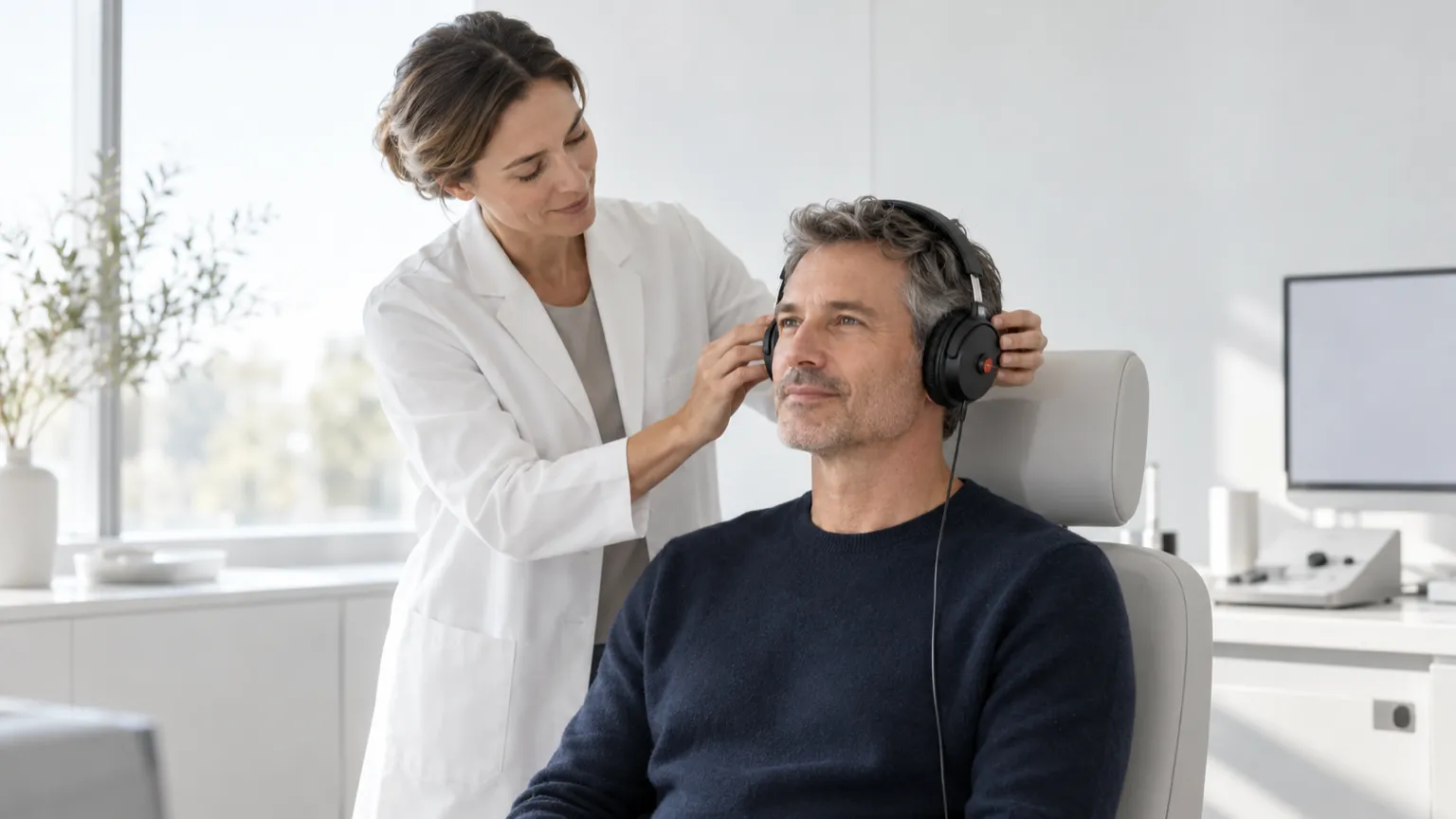
- Get a baseline hearing test if you work or spend a lot of time in noise, and repeat it periodically.
Know your levels
The first step in prevention is knowing which places and habits push you over 85 dBA. You can check any room right now with the free online meter, and compare readings with the decibel chart. Decibel Meter: dB Sound Level for iPhone and Apple Watch adds Leq, max and peak tracking and a NIOSH and OSHA noise dose, so you can see how much of a safe day a shift, a gig or a workshop session has used. It is a useful screening tool, not a certified dosimeter. The app is free to download, and measuring is part of the subscription. See what the app does.
Questions
What is noise-induced hearing loss?
It is hearing loss caused by sound that is too loud for too long, or by a single very loud impulse. Loud sound damages and eventually kills the hair cells in the inner ear, and in humans those cells do not grow back.
At what decibel level does hearing loss start?
NIDCD says long or repeated exposure at or above 85 dBA can cause hearing loss, while sound at or below 70 dBA is unlikely to, even after long exposure. Impulse noise around 140 dB can cause damage instantly.
Can noise-induced hearing loss be reversed?
A temporary dulling of hearing after noise often recovers within 16 to 48 hours. Permanent loss from damaged hair cells does not recover on its own. An audiologist can test your hearing and explain options such as hearing aids.
What are the first signs of noise-induced hearing loss?
Common early signs are ringing in the ears after noise, speech that sounds muffled in noisy places, and trouble hearing high-pitched sounds. A hearing test often shows a dip around 4 kHz before people notice anything.
How common is noise-induced hearing loss?
NIDCD cites CDC data suggesting at least 10 million US adults under 70, and perhaps as many as 40 million, show hearing test signs of noise damage. WHO says over 1 billion young adults are at risk from unsafe listening.