How loud is 90 decibels?
90 dB is about as loud as a gas lawn mower or a motorcycle at 8 m.
90 dB is OSHA's legal limit for an 8-hour workday in the US. Under the stricter NIOSH rule, 90 dB is safe for only about 2.5 hours.
- Sounds like
- A gas lawn mower or a motorcycle at 8 m
- Loudness
- Very loud
- Safe per day (NIOSH)
- 2.5 h
- OSHA workplace limit
- 8 h
- Sound pressure
- 632 mPa
- Sound intensity
- 1 mW/m²
90 dB on the decibel scale
Tap another sound to compare- Safe · under 65 dB
- Caution · 65–85 dB
- Risk · over 85 dB
What 90 dB sounds like
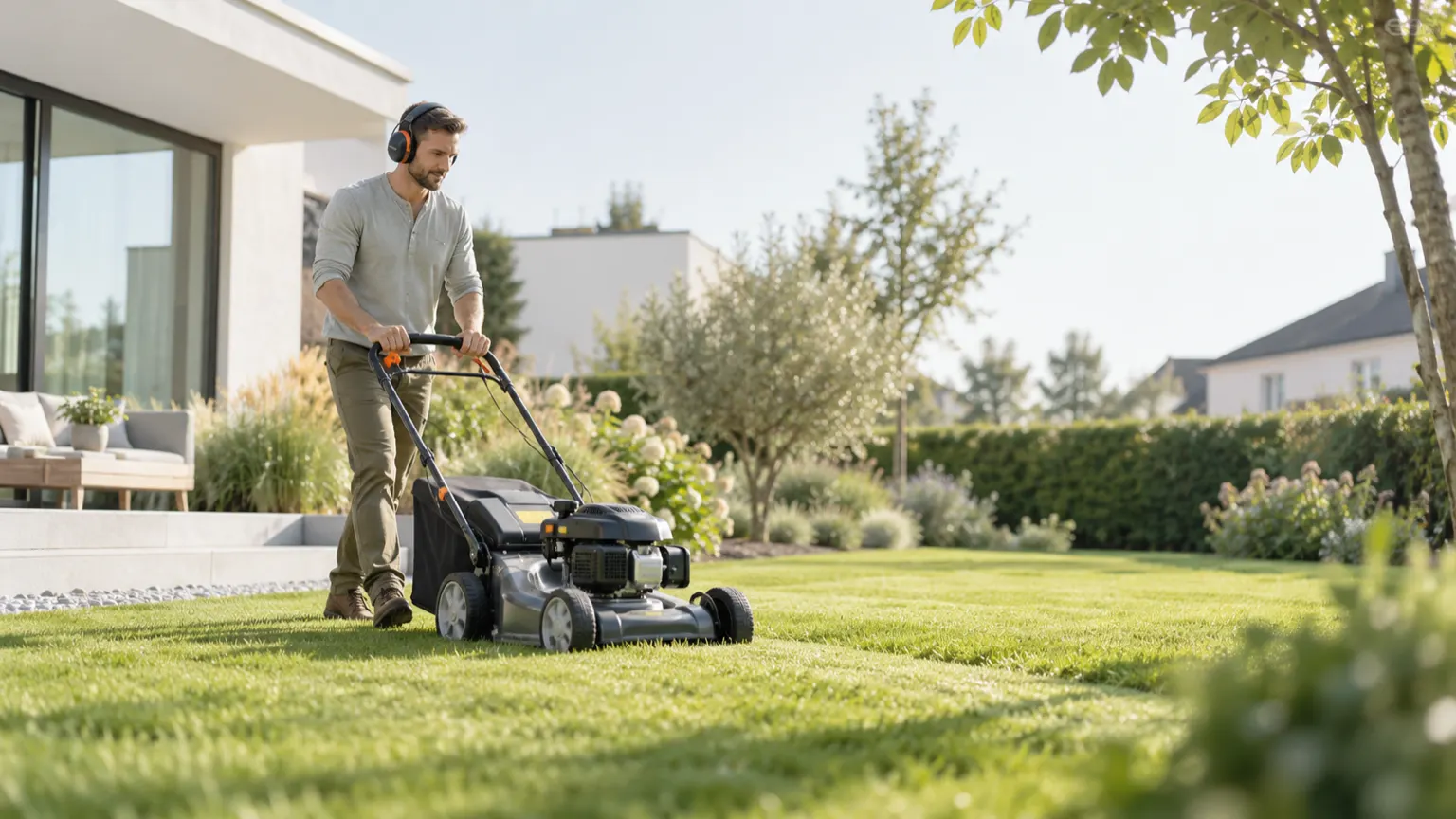
- A gas lawn mower
- A motorcycle at 8 m
- A subway train
- A loud hair dryer
Mowing the lawn, riding the subway, power tools in a garage. Ear protection is a good idea for anything longer than a short job.
Published sound levels near 90 dB
| Sound | Published level | Source |
|---|---|---|
| Motorcycle at 25 ft (7.6 m) | 90 dB | Purdue University |
| Tractor | 90 dB | Center for Hearing and Communication |
| Truck, shouted conversation | 90 dB | Center for Hearing and Communication |
| Blender, food mixer or processor | 80–90 dB | Center for Hearing and Communication |
| Subway | 90–115 dB | Center for Hearing and Communication |
| Movie theater | 74–104 dB | NIDCD (NIH) |
| Motorcycles and dirt bikes | 80–110 dB | NIDCD (NIH) |
Figures are as each source gives them; they differ with distance and measuring method.
Is 90 dB safe?
90 dB can damage hearing. NIOSH recommends no more than 2.5 h a day at this level, and OSHA’s legal workplace limit is 8 h. Ear plugs or earmuffs typically cut 15–30 dB.
At 90 dB the question is how long. NIDCD says long or repeated exposure at or above 85 dBA can cause hearing loss, and the louder the sound, the shorter the time it takes. The NIOSH rule (8 hours at 85 dBA, halved for every 3 dB) works out to 2.5 h a day at 90 dB, because 90 dB carries 3.2 times the sound energy of 85 dB. The damage is to hair cells in the inner ear, which do not grow back; OSHA calls the resulting loss permanent.
Hearing damage from noise adds up over time and does not heal. If your ears ring or sounds seem muffled after being somewhere this loud, that is a sign the exposure was too long. How loud is too loud? explains the limits in detail.
90 dB compared with other sounds
| Compared with | Difference | Sounds | Sound energy |
|---|---|---|---|
| Whisper (30 dB) | +60 dB | 64× as loud | 1,000,000× more |
| Conversation (60 dB) | +30 dB | 8× as loud | 1,000× more |
| Alarm clock (80 dB) | +10 dB | 2× as loud | 10× more |
| Heavy traffic (85 dB) | +5 dB | 1.41× as loud | 3.2× more |
| Headphones at max (100 dB) | −10 dB | 2× quieter | 10× less |
Rule of thumb: +10 dB sounds about twice as loud and carries ten times the energy. See what is a decibel.
How 90 dB drops with distance
Outdoors, sound from a small source falls about 6 dB per doubling of distance (OSHA Technical Manual). For 90 dB at 1 m:
| Distance | 1 m (3 ft) | 2 m (7 ft) | 4 m (13 ft) | 8 m (26 ft) | 16 m (52 ft) | 32 m (105 ft) |
|---|---|---|---|---|---|---|
| Level | 90 dB | 84 dB | 78 dB | 72 dB | 66 dB | 60 dB |
On that rule the level reaches 85 dB at about 1.8 m (6 ft). Indoors, reflections make the drop smaller.
How to check if a sound is 90 dB
Open the free online decibel meter on this site and allow the microphone. Hold your phone or laptop where your ears would be, wait a few seconds, and read the average rather than the momentary number. For a reliable, calibrated reading you can save or show to someone else, use the Decibel Meter app on iPhone.