Ringing in Ears After a Concert: Why It Happens and How Long It Lasts
Ringing ears after a concert signal noise overload. It usually fades within hours to a day or two. When to see a doctor and how to avoid it.
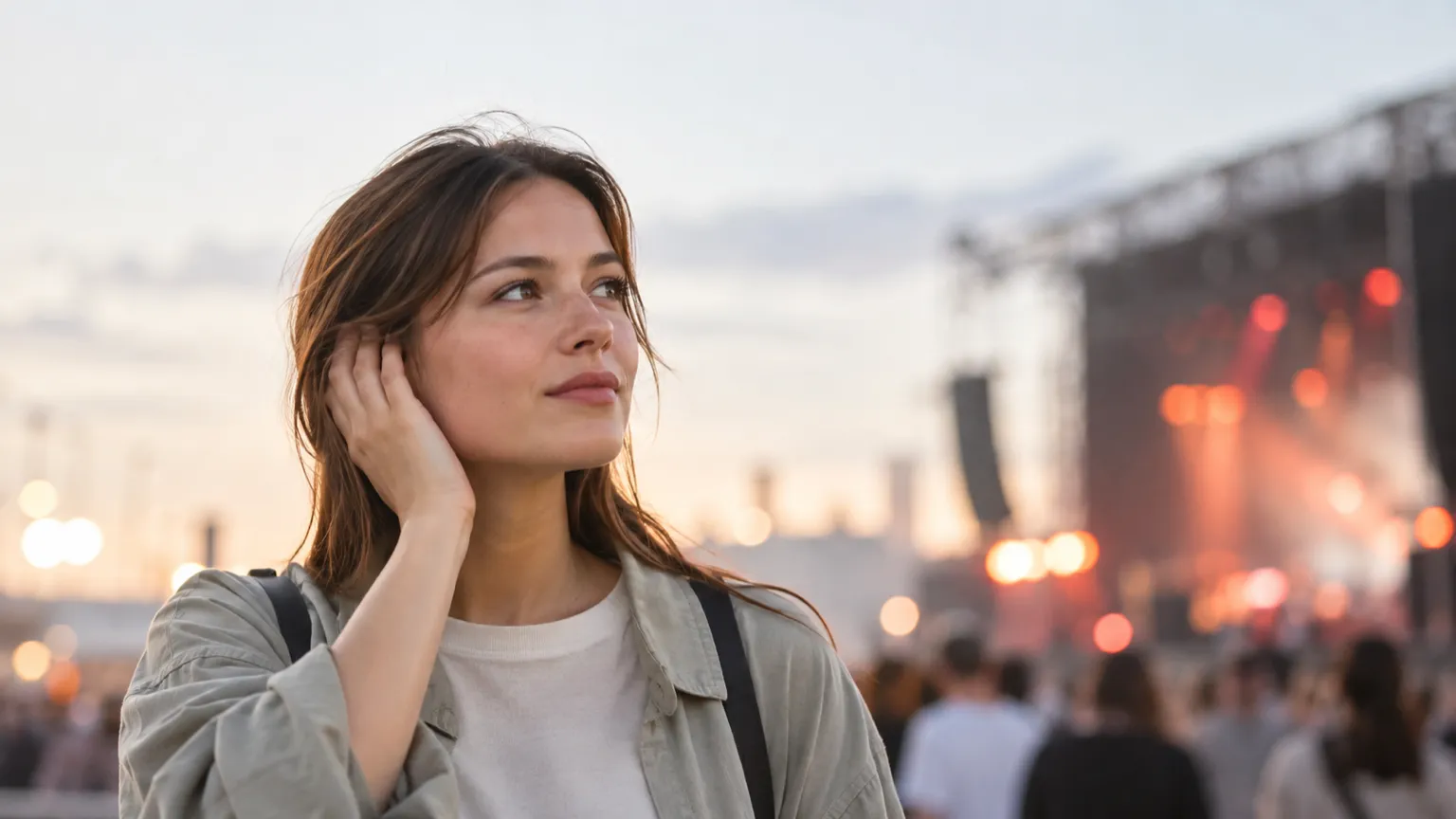
Ringing in your ears after a concert is your inner ear telling you it was overloaded. Doctors call the ringing tinnitus, and after a loud night out it is usually temporary: it fades within a few hours for most people, and within a day or two at most. Muffled hearing often comes with it and clears on the same timeline. If either symptom is still there after a couple of days, see a doctor or audiologist.
This page is general information, not medical advice. It explains what is going on, how long it normally lasts, which signs need a professional, and how to stop it happening next time.
Why do my ears ring after a concert?
Most concerts run at around 100 to 110 dB in the crowd, and louder near the stage. The US National Institute on Deafness and Other Communication Disorders (NIDCD) lists concerts at roughly 94 to 110 dBA. At those levels, the tiny hair cells in your inner ear are pushed far beyond their normal workload.
After a few hours of that, the hair cells and the nerve connections behind them become temporarily worn out. Two things follow:
- A temporary drop in hearing. Audiologists call this a temporary threshold shift. Sounds seem dull or “cotton wool” quiet, especially high sounds and speech.
- Phantom sound. With less input coming from the ear, the hearing system turns up its own sensitivity, and you hear ringing, buzzing, hissing or whistling that is not really there.
NIDCD names noise exposure, including concerts and sporting events, as one of the most common triggers for tinnitus.
How long does ringing after a concert last?
| What you notice | Typical course | What to do |
|---|---|---|
| Faint ringing, hearing feels normal | Fades within a few hours | Rest your ears, avoid more loud noise |
| Ringing plus muffled hearing | Usually clears overnight or within a day or two | Keep things quiet, check how it feels after a night’s sleep |
| Ringing or muffled hearing after 2 days | Not typical | Book a hearing check with a doctor or audiologist |
| Sudden hearing loss in one ear, dizziness, pain | Not typical | Seek medical care the same day |
Recovery depends on how loud the show was, how long you were there, how close you stood to the speakers, and how often your ears have been through this before. Someone who stood at the barrier for three hours will usually take longer to recover than someone at the back for one set.
Is ringing after a concert a sign of permanent damage?
Not necessarily, but it is a clear sign that the exposure was more than your ears could handle. Two points matter here.
First, noise-induced hearing loss adds up. Each time your ears go through a temporary shift, there is a chance that not everything recovers. Hair cells that die do not grow back in humans, so the losses are permanent.
Second, normal hearing tests may not show early damage. Animal research has found that loud noise can damage the connections between hair cells and the hearing nerve even when hearing thresholds return to normal. Researchers are still working out how this applies to people, but it is one more reason to treat repeated ringing as a warning rather than a rite of passage.
The practical message: one episode is common and usually harmless. A pattern of ringing ears after every gig, club night or festival is how lasting hearing problems build up.
What should I do if my ears are ringing right now?
There is no proven pill, supplement or ear drop that switches off noise-related ringing. The sensible steps are simple:
- Give your ears quiet time. Skip the after-party, the loud bar and the earbuds on the way home. Your ears recover best without more noise on top.
- Do not turn up other sounds to compensate. If your hearing feels muffled, turning up the TV or your phone adds more exposure to tired ears.
- Make sleep easier. Ringing tends to seem louder in a silent bedroom. Many people find a fan or soft background sound at a low level makes it less noticeable while it fades. Keep that sound quiet.
- Note how it changes. Check how it feels the next morning and the day after. Improvement over 24 to 48 hours is the usual pattern.
- Plan protection for next time. See the tips further down.
Avoid putting anything in your ear canal, and be cautious with online “tinnitus cures”. If symptoms do not settle, a professional assessment is the right next step.
When should I see a doctor or audiologist?
Book an appointment with a doctor, an ear, nose and throat (ENT) specialist or an audiologist if:
- the ringing or muffled hearing lasts more than a day or two,
- it keeps coming back after every loud event, or
- it is starting to affect your sleep, concentration or mood.
Seek medical care the same day if you notice any of these:
- Sudden hearing loss, especially in one ear. NIDCD advises seeing a doctor immediately for sudden deafness, because prompt assessment matters.
- Dizziness, a spinning feeling or loss of balance.
- Ear pain, fluid or blood coming from the ear.
- Ringing that pulses in time with your heartbeat.
An audiologist can test your hearing, compare it with future tests and talk you through options if tinnitus persists. The American Speech-Language-Hearing Association (ASHA) has a directory and general guidance on tinnitus.
How loud was the concert, really?
It helps to see the numbers. NIOSH, the US body that sets health-based noise guidance, recommends no more than 8 hours a day at 85 dBA, halving the time for every 3 dB increase.
| Concert level | NIOSH safe time per day | A 3-hour show uses |
|---|---|---|
| 95 dB | about 47 min | about 4 days’ allowance |
| 100 dB | 15 min | about 12 days’ allowance |
| 105 dB | about 5 min | about 38 days’ allowance |
| 110 dB | about 1.5 min | about 120 days’ allowance |
The World Health Organization’s global standard for safe listening venues and events recommends that venues keep sound at or below 100 dB averaged over 15 minutes, with free hearing protection and quiet areas for the audience. Many shows run hotter than that, especially near the front. The loudest sounds list and the decibel chart put these levels in context with everyday noise.
How to prevent ringing ears at the next concert
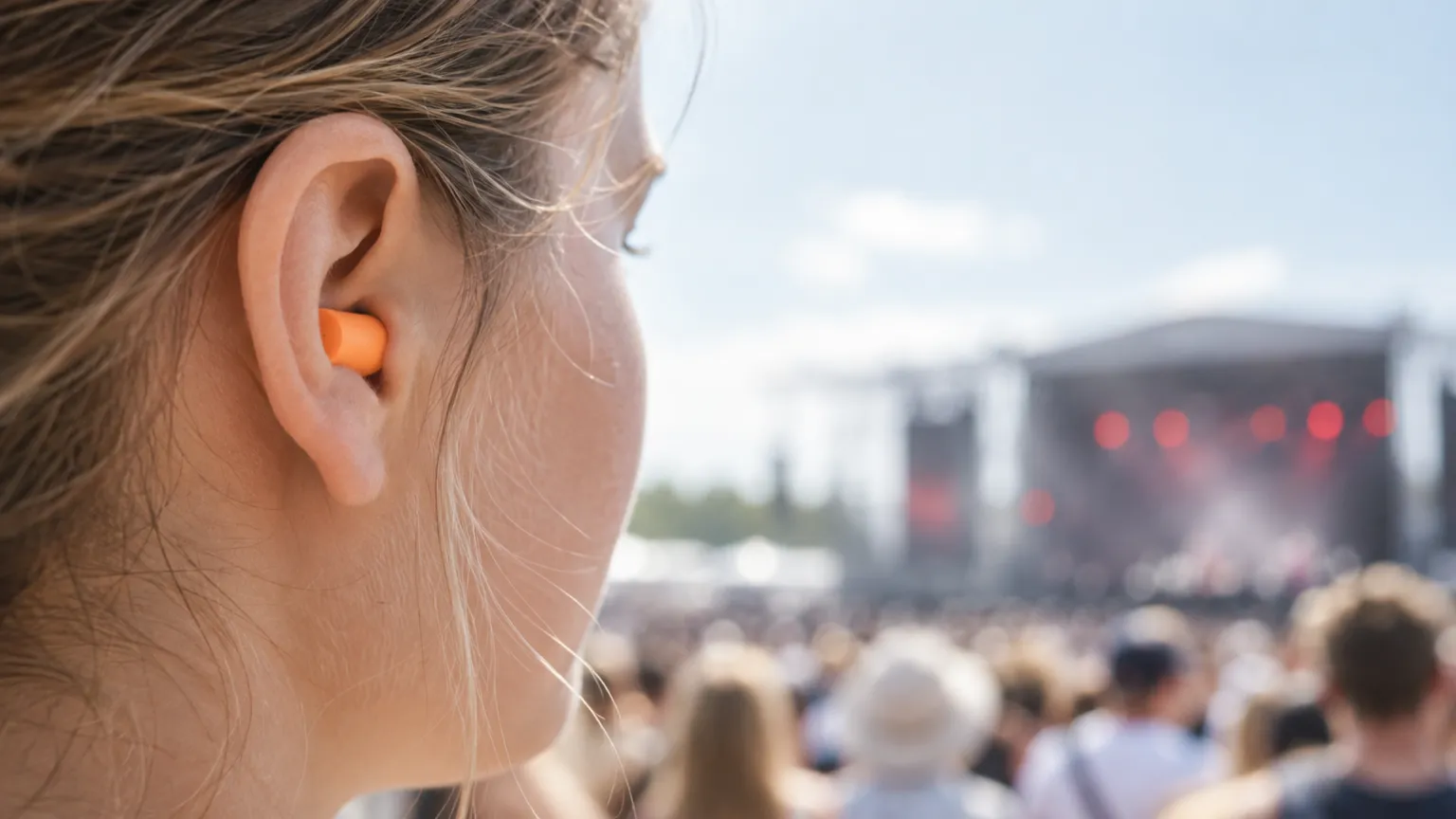
- Wear earplugs. Foam earplugs, inserted properly, typically cut 15 to 30 dB. Musicians’ earplugs lower the level more evenly, often by 10 to 25 dB, so the music still sounds clear. A 110 dB show heard through 20 dB of protection is roughly a 90 dB show.
- Stand back from the speakers. Moving further away and out of the direct line of the speaker stacks makes a real difference. The area near the mixing desk is often quieter than the front and is where the sound is balanced best.
- Take breaks. Step out to a quieter area for a few minutes every hour. The WHO venue standard recommends that events offer these quiet zones.
- Limit loud nights in a row. Back-to-back festival days give your ears no recovery time. Protect them every day, not just the first.
- Check the level yourself. It is hard to judge loudness by ear once you have been in a loud room for a while, because your hearing adapts. A quick reading tells you whether you are at 95 dB or 110 dB. For a general picture of safe limits, see how loud is too loud.
Measuring the noise at your next show
Decibel Meter: dB Sound Level for iPhone and Apple Watch shows the live level, tracks the average (Leq), maximum and peak over a whole set, and calculates a NIOSH or OSHA noise dose so you can see how much of a safe day the show has used. Phone microphones can top out at very high levels, so treat readings near the stage as a minimum. The app is free to download, and live measuring is part of the subscription. See what the app does, or use the free online meter in your browser for a quick check with no install.
Questions
How long does ringing in the ears last after a concert?
For most people it fades within a few hours, and almost always within a day or two. If it is still there after two days, or your hearing still feels muffled, get your hearing checked by a doctor or audiologist.
Does ringing after a concert mean I have hearing damage?
It means your ears were overloaded. Hearing usually recovers, but the ringing is a warning that the exposure was too long or too loud. Repeated episodes add up, and noise-induced hearing loss is permanent.
Is there anything I can take to stop the ringing?
There is no proven pill or supplement that stops noise-related ringing. Resting your ears in quiet surroundings is the sensible step. If the ringing persists, a doctor or audiologist can examine your ears and discuss options.
When should I see a doctor about ringing ears?
See a doctor or audiologist if the ringing or muffled hearing lasts more than a day or two. Seek care the same day for sudden hearing loss, especially in one ear, or for dizziness, ear pain, discharge or ringing that pulses with your heartbeat.
How can I avoid ringing ears at the next concert?
Wear earplugs, stand away from the speakers, and take breaks in a quieter area. Foam or musicians' earplugs typically lower the level by 15 to 30 dB, which can turn a 110 dB show into a much safer one.