The Loudest Sounds: Gunshots, Jet Engines, Concerts and Krakatoa
How loud is a gunshot, a jet engine or a concert? A ranked list of loud sounds in decibels, the Krakatoa eruption, and why 194 dB is the limit in air.
The loudest sound in recorded history was the eruption of Krakatoa in 1883. Closer to home, the loudest things most people ever hear are gunshots, fireworks and jet engines, all of which can reach 140 dB or more at close range. That is far past the point where a single exposure can damage hearing.
Below is a ranked list of loud sounds with typical levels, followed by a closer look at the ones people ask about most.
Loud sounds ranked by decibels
Levels depend heavily on distance, so each figure assumes the distance given or a typical listening position. Values are approximate.
| Sound | Typical level |
|---|---|
| Krakatoa eruption (1883), measured about 160 km away | about 172 dB |
| Stun grenade at a few metres | 170–180 dB |
| Large rocket launch, close to the pad | above 170 dB |
| Gunshot (handgun, rifle, shotgun) at the shooter’s ear | 140–175 dB |
| Fireworks at close range | 140–160 dB |
| Loudest stadium crowd on record | about 142 dB |
| Jet engine at 30 m | 140 dB |
| Jackhammer at 1 m, military jet at 100 m | 130 dB |
| Jet taking off at 100 m | about 125 dB |
| Ambulance siren up close, thunderclap overhead | 120 dB |
| Rock concert near the speakers, chainsaw, car horn | 110 dB |
| Stadium crowd, helicopter at 30 m | 105 dB |
| Earbuds at full volume, snowmobile | 100 dB |
| Motorcycle, electric drill | 95 dB |
| Gas lawn mower, subway train | 90 dB |
| Heavy traffic, blender | 85 dB |
For the quieter half of the scale, from whispers to vacuum cleaners, see the full decibel chart.
The loudest sound ever: Krakatoa
On 27 August 1883, the volcanic island of Krakatoa, between Java and Sumatra, blew itself apart. The final explosion was heard on the island of Rodrigues, near Mauritius, nearly 4,800 km away. People there reported what sounded like distant gunfire.
A pressure gauge at a gasworks in Batavia (now Jakarta), about 160 km from the volcano, recorded a spike so large that it went off the scale. Converted to decibels, the pressure jump works out to roughly 172 dB at that distance. Nobody knows how loud it was at the source.
The pressure wave did not stop there. Barometers around the world recorded it passing over them several times over the following days as it travelled around the planet and back again. No other recorded sound comes close.
Why 194 dB is the limit in air
Sound is a pressure wave. As it passes, air pressure swings a little above and a little below normal atmospheric pressure, which is about 101,325 pascals at sea level.
The low point of that swing cannot go below zero, because you cannot have less than a vacuum. So the largest possible sound wave in air at sea level has an amplitude equal to atmospheric pressure itself. On the decibel scale, with its reference of 20 micropascals, that works out to about 194 dB.
Anything “louder” is no longer an ordinary sound wave. It becomes a shock wave or blast wave, where the air is pushed forward in a single high-pressure front instead of oscillating. Big explosions, the near field of rocket engines and Krakatoa itself fall into this category. When you see figures above 194 dB quoted for them, they describe blast overpressure rather than sound in the usual sense.
Underwater figures are a separate case. Water carries far higher pressures, and underwater decibels use a different reference (1 micropascal instead of 20). That is why whale calls are often quoted at 180 to 230 dB. Those numbers cannot be compared directly with sounds in air.
If you want to know how the scale itself works, read what is a decibel.
How loud is a gunshot?
A gunshot is usually between 140 and 175 dB at the shooter’s ear. Small-calibre rimfire rifles sit at the low end. Large handguns, shotguns and high-powered rifles reach 155 dB and above. Shooting indoors is worse, because walls reflect the blast back at you.
Gunshots are impulse noise: extremely loud but lasting only milliseconds. Both NIOSH and OSHA set 140 dB peak as the ceiling for unprotected impulse exposure, so nearly every unsuppressed firearm is above it. A single shot without protection can cause permanent tinnitus.
A suppressor reduces the level but does not make a gun quiet. Many suppressed firearms still measure around 130 to 140 dB. Shooters are advised to wear both earplugs and earmuffs together.
How loud is a jet engine?
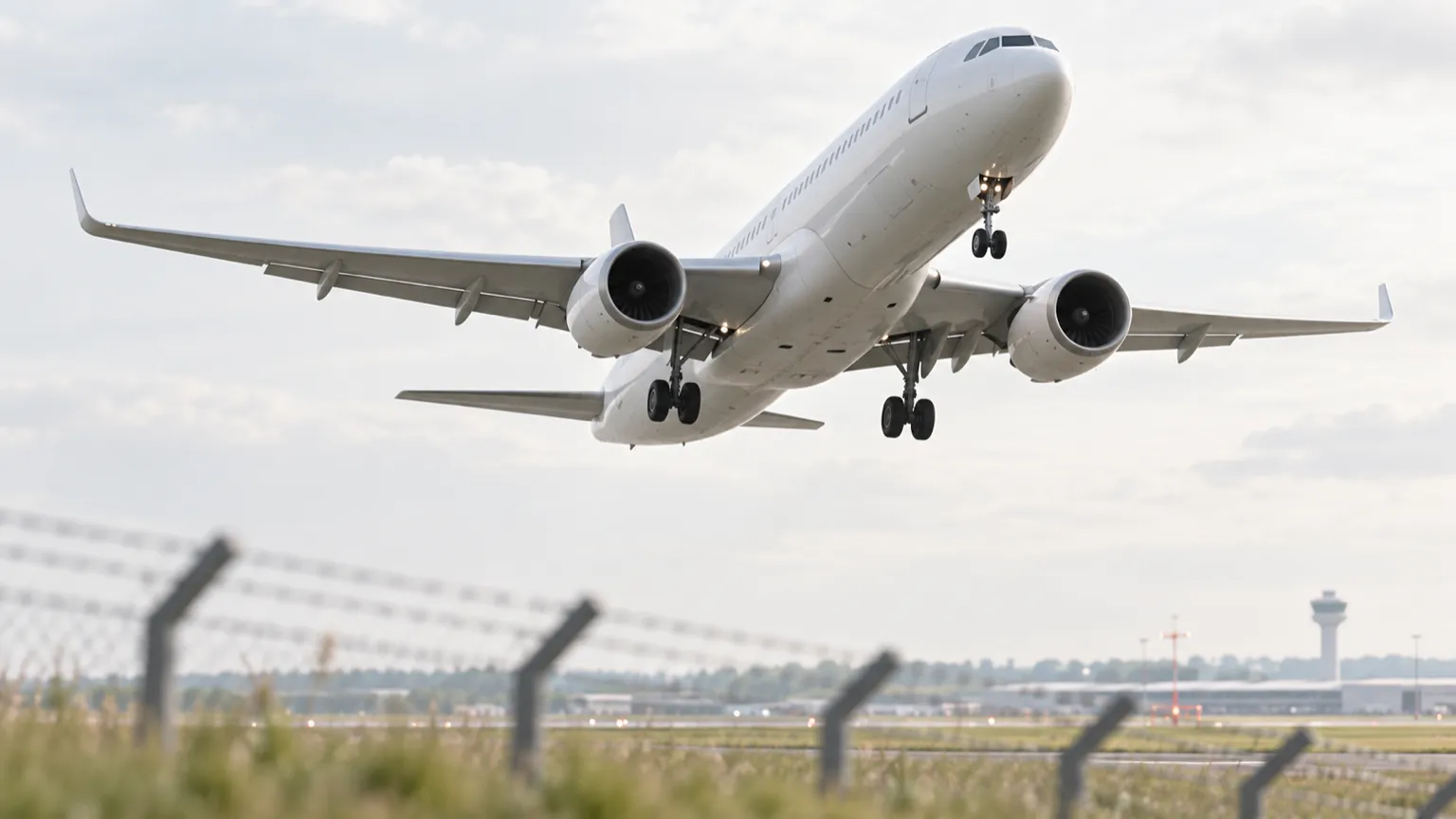
A jet engine produces about 140 dB at 30 m, and more up close. A jet taking off is still around 125 dB at 100 m and roughly 120 dB at 300 m. Airport ground crew wear heavy ear defenders for this reason.
Inside the cabin, the level is much lower: typically in the low-to-mid 80s during cruise. That is not harmful for the length of most flights, but noise-cancelling headphones make long flights noticeably less tiring.
How loud is a concert?
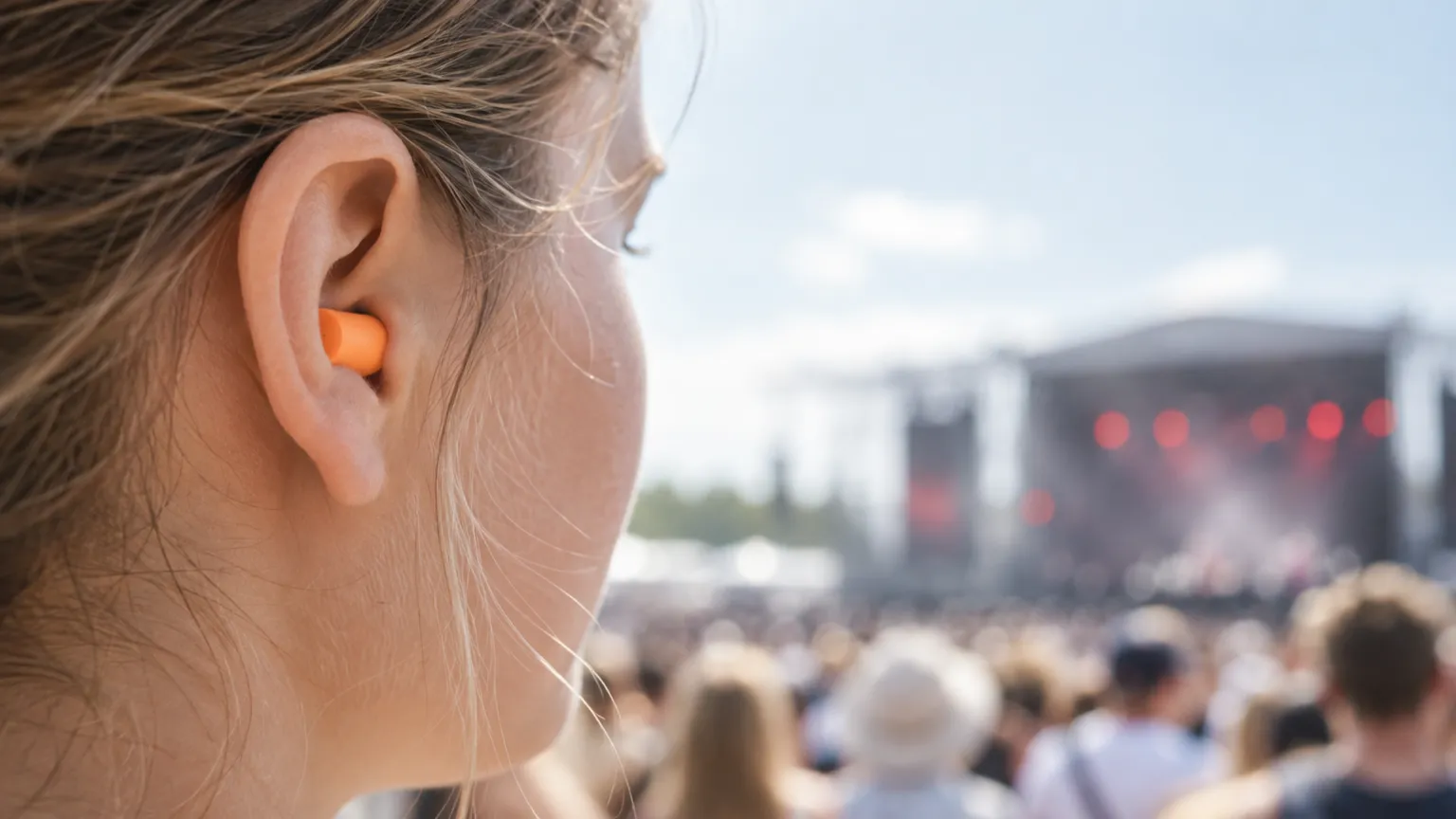
Most rock and pop concerts run between 100 and 120 dB, with the highest levels near the stage and the speaker stacks. The mixing desk in the middle of the venue is often around 100 dB. Clubs and festivals are similar.
At 110 dB, NIOSH guidance allows only about a minute and a half per day. A full concert without protection is many times that, which is why ringing ears afterwards are so common. Musicians’ earplugs cut the level by 15 to 25 dB while keeping the sound balanced, so the music still sounds good.
Stadium crowds
A cheering crowd regularly reaches 105 dB or more. In 2014, Guinness World Records recognised a crowd at Arrowhead Stadium in Kansas City, measured at about 142 dB, as the loudest crowd roar at an outdoor stadium. Levels like that are measured close to the crowd at its loudest moment, not sustained over a whole game.
How loud is a lawn mower?
A gas lawn mower is about 85 to 95 dB at the operator’s ear, with 90 dB a common figure. That is OSHA’s 8-hour limit and safe for only about 2.5 hours a day under NIOSH. Battery and electric mowers are noticeably quieter, often in the 70s and low 80s.
Other garden tools are louder. Gas leaf blowers and chainsaws can reach 100 to 110 dB at the operator. Ear protection is a good idea for anything longer than a short job.
Everyday loud sounds people underestimate
- Sirens: about 120 dB up close. Brief, but enough to hurt.
- Car horns: around 110 dB at 1 m.
- Hair dryers and blenders: 80 to 90 dB, right next to your ears.
- Toys: some squeaky and electronic toys exceed 100 dB when held to the ear.
- Baby crying: up to around 110 dB directly next to your ear.
Our guide to how loud is too loud has the safe daily time for every level.
Can a phone measure these?
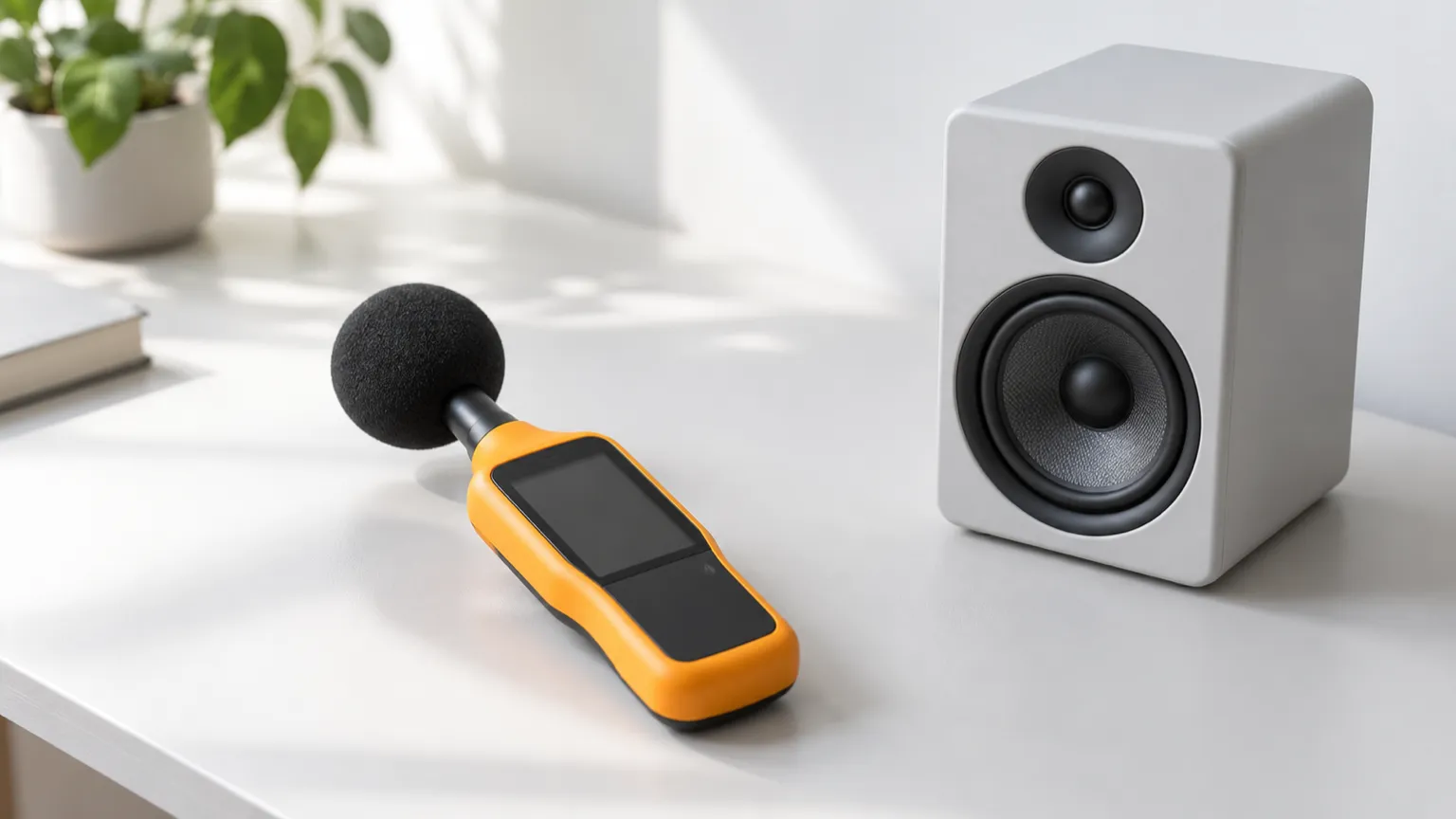
Not the loudest ones. Phone microphones are built for speech and typically clip somewhere between 100 and 120 dB, depending on the model. Beyond that point, the reading flattens out even if the sound keeps getting louder. A phone can tell you a concert is “at least 110 dB”, but a gunshot or a jet engine at close range needs a professional meter rated for high levels.
Measure loud sounds yourself
Decibel Meter: dB Sound Level for iPhone and Apple Watch shows the live level and records max and peak values, so you can see how loud a concert, a mower or a motorbike really is. Its camera mode overlays the reading on video, which is useful for showing where a sound came from. Keep in mind the microphone limits above for very loud sources. The app is free to download, and live measuring is part of the subscription. See what the app does.
Questions
What is the loudest sound ever recorded?
The eruption of Krakatoa in 1883. A pressure gauge about 160 km away recorded a spike equal to roughly 172 dB, and the explosion was heard nearly 4,800 km away on the island of Rodrigues.
How loud is a gunshot?
Usually 140 to 175 dB at the shooter's ear, depending on the firearm. That is above the 140 dB peak limit for unprotected impulse noise, so a single unprotected shot can cause lasting damage.
What is the loudest possible sound in air?
About 194 dB at sea level. Beyond that, the low point of the pressure wave would have to fall below a vacuum, so the sound becomes a shock wave instead of an ordinary sound wave.
How loud is a jet engine?
About 140 dB at 30 m, and around 125 dB at 100 m during takeoff. Inside the cabin during cruise, levels are much lower, typically in the low to mid 80s.