How Loud Is Too Loud for Headphones? Safe Headphone Volume Explained
Keep headphones under 80 dB for adults (75 dB for kids) to stay within WHO limits. At full volume, earbuds reach about 100 dB: safe for only 15 minutes.
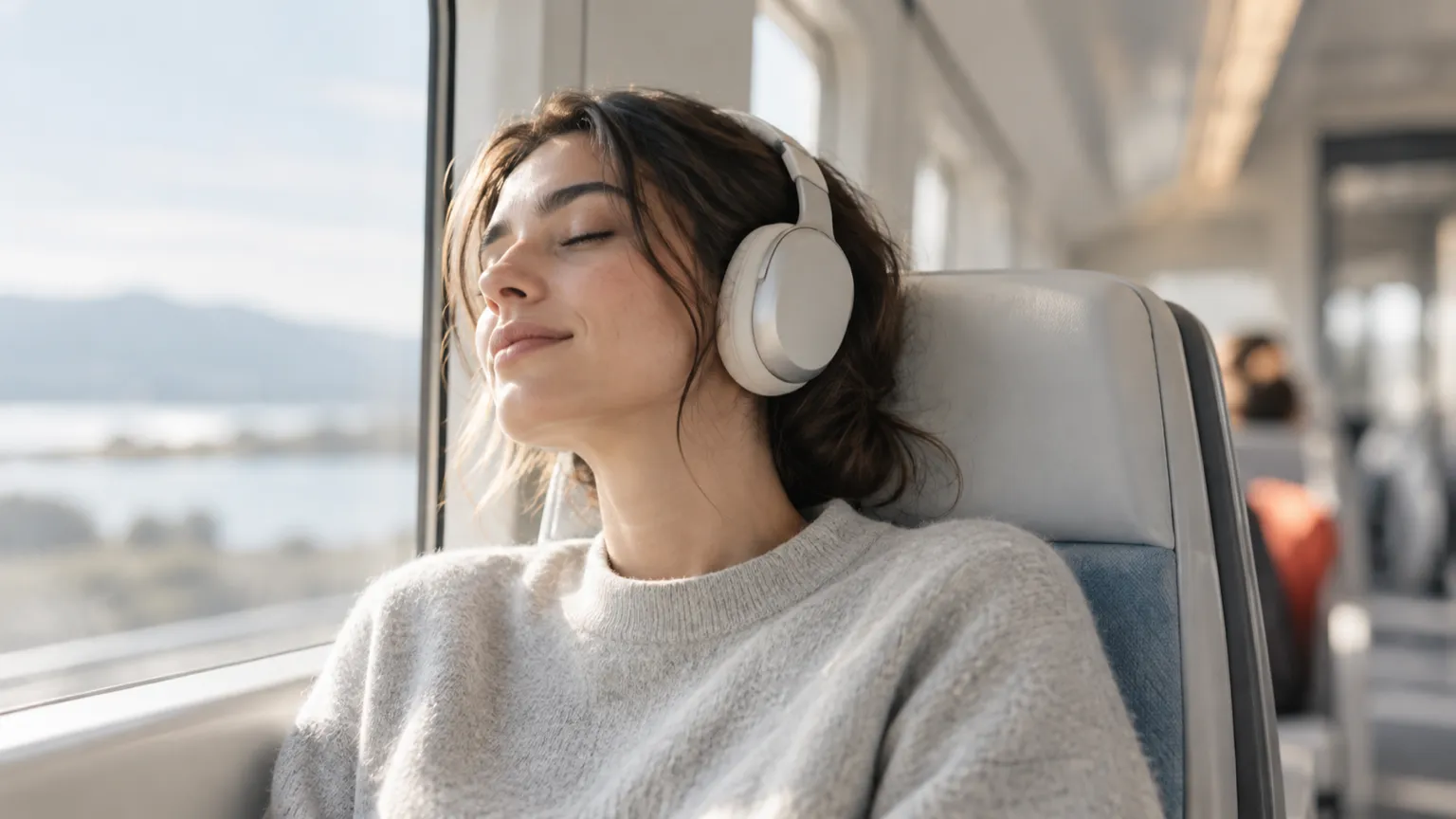
Headphones become too loud when you listen above roughly 80 dB for long stretches. The World Health Organization and the International Telecommunication Union set a safe listening budget of 80 dB for 40 hours a week for adults and 75 dB for 40 hours a week for children. Most phones can push earbuds to around 100 dB at full volume, and NIOSH guidance allows only about 15 minutes a day at that level.
So the answer is less about a single number on the volume slider and more about level multiplied by time. Moderate volume for a long commute is fine. Maximum volume for an hour every day is how hearing damage builds up.
What is a safe headphone volume in decibels?
The WHO-ITU standard (known as H.870) treats listening as a weekly dose, the same way workplace rules do. Here is how the budget shrinks as the level rises, using the 3 dB rule that both WHO and NIOSH apply: every 3 dB increase doubles the sound energy and halves the safe time.
| Average headphone level | Safe listening time (adults, WHO-ITU) | Safe time per day (NIOSH) | Roughly like |
|---|---|---|---|
| 75 dB | About 127 h a week | No limit | Vacuum cleaner up close |
| 80 dB | 40 h a week | No limit | Alarm clock at 1 m |
| 83 dB | 20 h a week | No limit | Busy street corner |
| 85 dB | About 12.5 h a week | 8 h | Heavy traffic |
| 89 dB | 5 h a week | About 3 h | Loud lawn mower |
| 92 dB | 2.5 h a week | About 1.5 h | Subway platform |
| 95 dB | About 1.25 h a week | 47 min | Motorcycle |
| 100 dB | About 25 min a week | 15 min | Earbuds at full volume |
For children and other sensitive listeners, the WHO-ITU budget starts 5 dB lower, at 75 dB for 40 hours a week, so every row above applies 5 dB earlier.
The WHO-ITU figures are weekly and the NIOSH figures are daily, which is why they look different. Both point the same way: average listening in the 70s is comfortable territory, and anything at 90 dB and up eats through a safe allowance quickly. The full scale is on the decibel chart, and the how loud is too loud guide explains where the 85 dB line comes from.
How loud are headphones at different volume settings?
There is no universal conversion from volume percentage to decibels. The same slider position produces very different levels depending on:
- The headphones. Sensitive in-ear models get much louder than large over-ear headphones at the same setting.
- The fit. Earbuds sealed deep in the ear canal deliver more sound than loose ones.
- The source. A quiet podcast and a loudly mastered pop track at the same setting can differ by 10 dB or more.
- The phone and region. Some phones cap output by default, and in the EU devices show a warning before you go past a set level.
As a rough guide only, many phone and earbud combinations land in the 70s dB around half volume, in the 80s at three quarters, and near 100 dB at maximum. Treat that as a sketch, not a measurement.
How do I check how loud my headphones are?
A room decibel meter cannot measure headphones properly, because the sound is delivered straight into your ear canal. Pointing a phone microphone at an earbud gives a number, but not the level your eardrum actually receives. Use the tools built into your phone instead.
On iPhone:
- Control Center hearing meter. Add the Hearing control to Control Center. While audio plays, it shows the live headphone level and whether it is OK or loud.
- Health app. Under Hearing > Headphone Audio Levels, it records your listening level over days and weeks and compares it with the WHO-based 7-day limit. Apple says levels are most accurate with Apple and Beats headphones and estimated for others.
- Reduce Loud Audio. Settings > Sounds & Haptics > Headphone Safety lets you set a ceiling, for example 85 dB, so louder sound is turned down automatically.
- Headphone notifications. iPhone and Apple Watch warn you when you have used up the weekly allowance.
Our iPhone measuring guide covers these settings alongside the microphone-based tools.
On Android: options vary by brand. Many phones show a warning when you raise media volume past a safe point, and some, including Samsung, offer a media volume limiter in the sound settings. Digital wellbeing tools on some models also track headphone exposure.
What is the 60/60 rule?
The 60/60 rule is the easiest habit to remember: no more than 60% volume for no more than 60 minutes at a time, then give your ears a break. It is a rule of thumb, not a scientific limit, because 60% means different levels on different devices. It works because it keeps most people well under the 85 dB line and builds in quiet time.
Other simple checks:
- The arm’s-length test. If someone next to you can hear your music, or you cannot hear them speak at arm’s length while wearing headphones, it is probably too loud.
- Set the volume in a quiet room. Your ears adapt to noise, so volume set on a loud train tends to stay high afterwards.
- Watch for after-effects. Ringing, buzzing or muffled hearing after listening means the level or duration was too much.
Why do people turn headphones up too loud?
The main reason is background noise. On a bus, train or plane, the surroundings can sit at 75 to 85 dB, and people raise the volume 10 dB or more above that to hear clearly. Noise-cancelling headphones, or well-sealed in-ear tips, cut the background so you can listen at a lower level. This is one of the most effective changes you can make.
Other reasons are habit, gradual creep (the volume goes up a notch at a time over a session) and music mastered loud. Volume limiters solve creep without you having to think about it.
Are headphones safe for kids?
Children’s ears are more vulnerable and children rarely notice when something is too loud. That is why the WHO-ITU budget for children is 75 dB rather than 80 dB.
- Many children’s headphones cap volume at around 85 dB. That is a useful safety net, but it is still a level to limit to a few hours a week.
- Turn on the phone or tablet’s volume limit as well, since some headphones exceed their stated cap with certain devices.
- Keep listening sessions short and check the volume yourself from time to time.
What are the warning signs of headphone damage?
Noise-induced hearing loss develops slowly and without pain. NIDCD and ASHA list the usual signs:
- Ringing, buzzing or hissing in the ears (tinnitus), especially after listening
- Speech sounding muffled, particularly in noisy places
- Needing to turn the volume up over time to hear the same detail
- Trouble hearing high-pitched sounds such as birdsong or consonants like “s” and “f”
This is general information, not a diagnosis. If any of these last more than a day, or you notice a sudden change in hearing in one or both ears, see a doctor or audiologist promptly. A hearing test gives you a baseline and shows whether anything has changed.
Checking the noise around you
Headphone levels are best tracked with your phone’s own headphone tools. The noise around you is where a sound level meter helps: knowing that your commute sits at 80 dB explains why you keep turning the volume up. You can check any room with the free online meter in your browser. Decibel Meter: dB Sound Level for iPhone and Apple Watch adds A, C and Z weighting, Leq, max and peak, and a NIOSH and OSHA noise dose for longer sessions; it is free to download, and measuring is part of the subscription. See what the app does.
Questions
What is a safe headphone volume in decibels?
For adults, keeping average listening at or below about 80 dB is safe for up to 40 hours a week under the WHO-ITU standard. For children the figure is 75 dB. Lower is always better.
Is 50% volume safe on headphones?
Usually, but it depends on the phone and the headphones. On many phone and earbud combinations, 50% volume lands somewhere in the 70s or low 80s dB, which is fine for normal listening sessions. Your phone's headphone level readout is a better guide than the slider position.
How many decibels are earbuds at full volume?
Many phones can drive earbuds to around 100 dB at maximum volume, and some combinations go higher. NIOSH guidance allows only about 15 minutes a day at 100 dB.
Can I measure my headphone volume with a decibel meter app?
Not accurately. A phone's microphone measures sound in the room, not inside your ear canal. Use your phone's built-in headphone level tracking, such as the Health app on iPhone, for headphone exposure.
What is the 60/60 rule?
It is a simple habit: listen at no more than 60% volume for no more than 60 minutes at a time, then take a break. It is a rule of thumb, not a precise limit.