The Loudest Animal in the World: Sperm Whales, Bellbirds and Tiny Insects
The loudest animal is the sperm whale, with clicks of about 230 dB underwater. Loudest land animals, birds and insects in dB, and why figures vary.
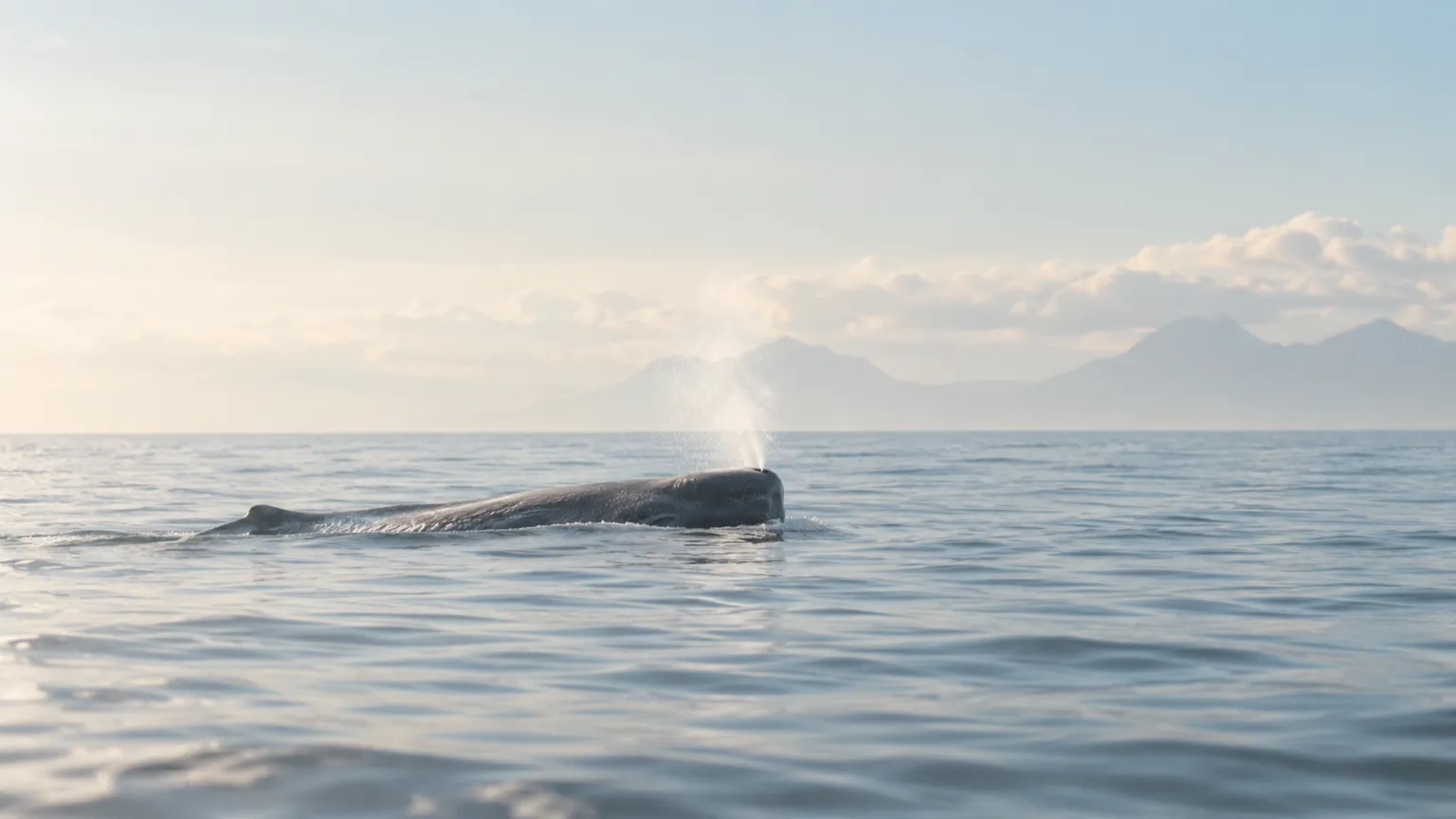
The loudest animal in the world is the sperm whale. Its echolocation clicks reach about 230 dB underwater, and Guinness World Records lists a peak of 236 dB. On land and in the air, the loudest well-measured call is the white bellbird’s song at about 125 dB at 1 m, while bulldog bats emit calls above 140 dB that are mostly too high-pitched for us to hear.
Those numbers are not directly comparable, though, and the way they were measured matters as much as the figures themselves.
The loudest animals, ranked
Figures are approximate and come from published measurements where possible. Underwater and in-air values use different references and cannot be compared one to one (see below).
| Animal | Sound | Level | Measured |
|---|---|---|---|
| Sperm whale | Echolocation clicks | about 230 dB, record 236 dB | Underwater, re 1 µPa |
| Blue whale and fin whale | Low-frequency calls | about 180 to 190 dB | Underwater, re 1 µPa |
| Snapping (pistol) shrimp | Claw snap | about 185 to 190 dB and up | Underwater, re 1 µPa at 1 m |
| Bulldog bats | Echolocation calls | about 137 dB average, above 140 dB peak | In air, close to the mouth, mostly ultrasonic |
| White bellbird | Mating song | about 125 dB | In air, at 1 m |
| Screaming piha | Call | about 116 dB | In air, at 1 m |
| Lion | Roar | around 110 dB and above | In air, close by |
| Cicadas (loudest species) | Song | above 100 dB | In air, close by |
| Water boatman (Micronecta scholtzi) | Song | up to about 99 dB | Underwater, estimated at 1 m, re 20 µPa |
For a sense of scale, a gas lawn mower is about 90 dB, a rock concert near the speakers about 110 dB and a siren up close about 120 dB.
Why is the sperm whale the loudest animal?
Sperm whales hunt squid in the dark, hundreds of metres down and sometimes more than a kilometre deep. They find prey by echolocation: a powerful click sent forward, then listening for echoes. The click is produced in the whale’s huge head, which holds an oil-filled organ (the spermaceti organ) that acts as a sound generator and lens, beaming the click forward.
A 2003 study led by Danish biologist Bertel Møhl measured clicks of up to 236 dB re 1 µPa, the figure Guinness uses. Most sources round to about 230 dB. The clicks are very short, a fraction of a millisecond, and tightly focused, so the full level only exists in a narrow beam in front of the whale.
NOAA Fisheries describes sperm whales as the largest of the toothed whales, hunting squid, sharks and fish on dives that routinely reach about 600 m (2,000 ft) and last up to 45 minutes. Echolocation is what makes that possible.
Why underwater decibels are different
A decibel is always a comparison against a reference. In air, the reference is 20 micropascals, roughly the quietest sound a person can hear. Underwater, scientists use 1 micropascal. That alone adds about 26 dB to any underwater figure.
Water is also much denser than air, so the same sound energy produces far higher pressure. Taking both effects together, Guinness gives a difference of about 61.5 dB between the two. By that rule, a 236 dB sperm whale click is roughly comparable to a 175 dB sound in air: still far beyond anything in the animal world on land, and about as loud as the loudest gunshots at the shooter’s ear, but not the “louder than a rocket launch” figure that is sometimes quoted.
The same caution applies to the loudest sounds ever recorded, where blast waves and underwater sounds are often mixed with ordinary sound in air. For the basics of the scale, see what is a decibel.
Blue whales: louder or just further?
Blue whale calls measure about 180 to 190 dB underwater, lower than sperm whale clicks. But they are long, deep moans below about 20 Hz, often too low for human hearing, and low frequencies travel enormous distances in water. Blue and fin whale calls can be detected hundreds of kilometres away. If “loudest” means “heard furthest”, the big baleen whales have a strong case.
The loudest land animals
Bulldog bats
A 2008 field study in Panama by Annemarie Surlykke and Elisabeth Kalko measured the echolocation calls of 11 bat species. The two bulldog bat species, which hunt fish and insects over water, were the loudest: average source levels of about 137 dB, with maximum levels above 140 dB. The calls are mostly ultrasonic, so to us these bats are nearly silent.
White bellbird: the loudest bird
The white bellbird of the Amazon weighs less than 250 g. In 2019, Jeffrey Podos and Mario Cohn-Haft reported in Current Biology that males reach about 125 dB at 1 m during one of their mating songs, beating the previous record holder, the screaming piha, at about 116 dB. Guinness lists 125.4 dB. Remarkably, males sing this song with females perched only a few metres away.
Howler monkeys
Howler monkeys are often called the loudest land mammal. Their calls carry for several kilometres through rainforest, helped by an enlarged, hollow bone in the throat that acts as a resonator. Decibel figures quoted online vary widely and few come from careful measurements, so treat any single number with caution.
Lions
A lion’s roar can be heard up to about 8 km away on a still night. Up close it is commonly quoted at around 110 dB or more, comparable to a chainsaw.
Roosters
A rooster’s crow is louder than most people expect, often over 100 dB close by. Researchers in Belgium measured crows above 130 dB at the bird’s own ear in 2018. Roosters protect their hearing partly by the way their ear canal closes when the beak opens wide.
The loudest animal for its size
The tiny water boatman Micronecta scholtzi, about 2 mm long, sings underwater by rubbing a tiny ridged organ against its abdomen. A 2011 study by Jérôme Sueur and colleagues estimated peaks of about 99 dB at 1 m. Scaled to body length, that output beats every marine and land mammal the authors compared it with. People walking by a pond can sometimes hear it from the bank.
Cicadas are the loudest insects in air. The loudest species exceed 100 dB close up, enough that a chorus in summer can drown out conversation.
How loud are everyday animals?
| Animal | Typical level |
|---|---|
| Cat purring | about 25 to 30 dB |
| Dog barking close by | about 90 to 100 dB |
| Rooster crowing at a few metres | about 90 to 100 dB |
| Crying baby (not an animal, but often asked) | up to about 110 dB right next to your ear |
A large dog barking close by is in the same range as a motorcycle at 95 dB. That is safe for a few minutes, but at that level NIOSH guidance allows less than an hour a day. The decibel chart shows where these sit among everyday sounds.
Measure animal sounds yourself
You can try the free online meter on a barking dog, a rooster or a cicada chorus with nothing to install. Decibel Meter: dB Sound Level for iPhone and Apple Watch records max and peak values, and its camera mode films the animal with the live level on screen. Phone microphones clip at very high levels, so the loudest sounds will read as “at least” the number shown. The app is free to download, and measuring is part of a subscription. See what the app does.
Questions
What is the loudest animal in the world?
The sperm whale. Its echolocation clicks have been measured at around 230 dB underwater (relative to 1 micropascal), and Guinness World Records lists 236 dB. Underwater decibels are not directly comparable with sounds in air.
What is the loudest land animal?
It depends on how you count. Bulldog bats emit echolocation calls above 140 dB close to the mouth, but these are mostly ultrasonic. Among sounds humans can hear, the white bellbird's 125 dB song is the loudest well-measured call, and howler monkeys and lions are among the loudest mammals.
What is the loudest bird?
The white bellbird of the Amazon. A 2019 study in Current Biology measured its mating song at about 125 dB at 1 m, beating the screaming piha at about 116 dB.
Is a blue whale louder than a sperm whale?
No, not per sound. Blue whale calls are around 180 to 190 dB underwater, below sperm whale clicks. But blue whale calls are long and low-pitched, so they travel hundreds of kilometres, which is why some people argue they are the louder animal overall.
Sources
- Guinness World Records — Loudest animal sound
- Science News — White bellbirds have the loudest known mating call of any bird
- Surlykke & Kalko (2008), Echolocating Bats Cry Out Loud to Detect Their Prey, PLOS One
- Sueur et al. (2011), So Small, So Loud: Extremely High Sound Pressure Level from a Pygmy Aquatic Insect, PLOS One
- NOAA Fisheries — Sperm Whale